The Significance of Compassionate Elder Care in Memory Assistance
Business Name: BeeHive Homes of Alamogordo
Address: 1106 San Cristo St, Alamogordo, NM 88310
Phone: (575) 215-3900
BeeHive Homes of Alamogordo
Beehive Homes assisted living care is ideal for those who value their independence but require help with some of the activities of daily living. Residents enjoy 24-hour support, private bedrooms with baths, medication monitoring, home-cooked meals, housekeeping and laundry services, social activities and outings, and daily physical and mental exercise opportunities. Beehive Homes memory care services accommodates the growing number of seniors affected by memory loss and dementia. Beehive Homes offers respite (short-term) care for your loved one should the need arise. Whether help is needed after a surgery or illness, for vacation coverage, or just a break from the routine, respite care provides you peace of mind for any length of stay.
1106 San Cristo St, Alamogordo, NM 88310
Business Hours
Memory loss changes the form of day-to-day live in manner ins which are very easy to take too lightly until you are living them. A missed out on consultation comes to be a distressing pattern. An acquainted dish is all of a sudden confusing. A loved one that as soon as took care of bills, drugs, and family members birthdays without a second thought may begin to duplicate the same question five times in an hour. These moments can really feel small in isolation, however with each other they modify the rhythm of a family. They also disclose why caring elder care issues a lot in memory support.
Memory care is not just about safety, though safety is constantly component of the image. It has to do with protecting self-respect when an individual can no more rely on memory the way they when did. It has to do with recognizing that confusion is not the like stubbornness, and frustration is not a character flaw. Great care looks beyond the diagnosis and sees the individual still present underneath the adjustments. That distinction impacts everything, from exactly how a caretaker speaks with just how an area is organized.
Compassion alters the experience of memory loss
Anyone that has spent time with an older grown-up living with dementia, Alzheimer's disease, or another cognitive problem understands that the emotional tone of care matters nearly as high as the physical atmosphere. A tranquil voice can stop a spiral. A patient pause can transform a frustrating exchange right into a manageable one. A caretaker who knows just how to redirect rather than appropriate can protect trust, especially throughout challenging moments when a person may not identify their surroundings or even their very own family members members.
I have seen households get here persuaded that their loved one has become "challenging," only to uncover that the genuine problem is worry. Worry of being rushed. Worry of not understanding what is happening. Fear of being dealt with like a youngster. Caring elder care addresses those fears straight. It slows down the speed. It describes things in simple language. It stays clear of power battles that only rise distress.

That human technique is particularly crucial in memory assistance since memory loss often removes a person's ability to promote on their own. If a senior can not remember what happened 10 minutes ago, they may not be able to report pain, cravings, or solitude in a standard way. Competent caregivers learn to read habits as interaction. Restlessness might mean discomfort. Resistance might indicate humiliation. Withdrawal may suggest overstimulation. When care groups understand those signals, they can respond with more precision and less guesswork.
Why memory support is various from other elder care
Not every type of senior care is developed for memory difficulties. Lots of older adults need aid with daily living, but memory assistance requires another layer of attention. The atmosphere, staffing patterns, interaction style, and everyday regimens all require to be adjusted to lower complication and assistance orientation.
In a well-run memory care setting, the day is constructed around predictability. Meals occur at regular times. Rooms and hallways are easy to browse. Aesthetic hints help homeowners find their way. Activities are chosen not just to keep individuals active, but to welcome involvement without stress. That is an extremely different version from a basic assisted living setup, where residents might be a lot more independent and able to choose amongst a wide variety of alternatives without much guidance.
Families searching for memory care near me are usually stunned by how much these details issue. A lovely structure does not guarantee excellent care. What matters is whether the personnel comprehend memory loss as a scientific problem with psychological repercussions, and whether they understand just how to maintain locals secure without making them feel caught or managed.
Good memory care likewise appreciates the fact that cognitive decline does not eliminate a person's background. One resident might still brighten at the audio of old jazz. Another might stop promoting much of the day however still fold towels with care since the activity really feels acquainted. These are not random preferences. They are hints to identity, and thoughtful caretakers utilize them to produce moments of connection.
The psychological problem on households is real
Families commonly go into the world of elder care progressively, after that all at once. In the beginning, they assist with groceries or tips. Later, they observe that medicine schedules are sliding or that the stove was left on. At some point, the duty changes from helper to caretaker, which transition can be exhausting.
The hardest component is often not the physical labor. It is the emotional obscurity. A boy might feel guilty for taking control of his mother's finances. A daughter may regret the loss of common discussions while still trying to make useful decisions regarding memory care, senior living near me alternatives, and future planning. Siblings might disagree regarding what level of support is required, which can turn a currently uncomfortable situation into a family conflict.
Compassionate elder care helps soothe that stress, not by replacing family members, however by offering family members area to be children, boys, spouses, and grandchildren once again. When professional caregivers take care of the daily stress factors, family members visits can come to be more purposeful. Instead of spending an entire visit encouraging a parent to take drug or consume lunch, relatives can rest together, browse photos, or just appreciate a silent afternoon.
That change matters more than people anticipate. Caregiver exhaustion is real, and it can sneak in gradually. Respite care can be a lifeline for families who are exhausted yet not yet ready for a long-term move into memory care. Even a short break allows caregivers to rest, capture up on job, or attend to their own health and wellness without consistent vigilance. Occasionally that time out is what maintains a family members from reaching a damaging point.
What thoughtful memory care appears like day to day
A thoughtful memory care program shows up in the small things. Personnel learn citizens' names and histories. They observe which early morning regular calmness one person and respite care which song improves another individual's mood. They recognize that a person who declines a shower may not be bold, but discouraged by the experience or shamed by the loss of privacy.
The information are useful, not sentimental. A caregiver who offers 2 garments choices rather than a closet full of choices lowers choice tiredness. A dining room with fewer distractions helps citizens eat even more comfortably. Clear lighting, minimalist hallways, and consistent signage minimize the requirement for constant improvement. These design selections are not aesthetic. They lower anxiety and maintain self-reliance for as lengthy as possible.
The ideal areas likewise recognize that a resident's behavior might alter throughout the day. Some individuals are tranquil in the morning and more distressed late in the afternoon. Others become much more puzzled when they are worn out, starving, or overstimulated. Team that are trained to observe these patterns can readjust routines prior to troubles intensify. That is where authentic expertise turns up, not in significant treatments but in stable prevention.
There is additionally an important distinction between supervision and overcontrol. Excellent memory assistance maintains people secure, however it does not strip them of selection anywhere selection is still possible. A resident might not be able to manage a complete independent schedule, yet they might still choose between tea and coffee, a coat and a cardigan, a silent walk and a music program. Those selections issue. They state, "You are still below. Your choices still count."
When to think about memory care
Families usually delay the step because they wish things will support. Often they do, for a while. But amnesia has a tendency to develop a pattern of gradual modification punctuated by unexpected dilemmas. A person that seems mainly great in your home may still be neglecting dishes, roaming in the evening, mismanaging medications, or leaving doors opened. Small gaps can promptly end up being harmful ones.
The choice ends up being a lot more urgent when home assistance starts to surpass what a family members can securely give. If an older grownup is continuously obtaining shed, falling, leaving appliances on, or coming to be aggressive when puzzled, the inquiry is no more whether aid is needed. It is what sort of aid is appropriate.
For some families, senior care in the home help a time, especially with going to assistants or prolonged family members support. For others, the needs of supervision, transportation, meal prep work, and emotional policy are too much to handle all the time. That is where a committed memory care setup can be an alleviation. It offers framework, specialist oversight, and a setup designed for cognitive impairment instead of attempting to adapt a general home environment to satisfy a complicated need.
There is no specific minute that fits every circumstance. Still, if the same troubles keep persisting in spite of sincere initiative, it may be time to assess elder care alternatives extra seriously. The appropriate selection is the one that shields both the older grownup and the member of the family who enjoy them.
Searching for the appropriate fit
When households start seeking memory care near me, they usually start with sensible worries. Is the area close enough for normal visits? Does it accept the budget they have? What does daily life really appear like inside the building? Those concerns are very important, however so is the atmosphere. A place can have polished sales brochures and still really feel impersonal the minute you step inside.
I constantly inform families to pay attention to the tone of the personnel. Do they talk to residents with heat and respect, or regarding them? Do they kneel to make eye call, or stand over a person that is currently distressed? Do they address questions clearly, or do they hurry via a scripted action? These are not small details. They disclose exactly how care is provided when no person is performing for a tour.
It can also help to ask exactly how the neighborhood manages challenging minutes. Every memory care setting will face them. Someone may stand up to bathing. Another person may come to be upset during the night or stray towards an exit. The inquiry is not whether issues take place, however how team respond. A thoughtful group utilizes de-escalation, redirection, and perseverance. A weak group relies also promptly on force, termination, or drug as a first response.
Families contrasting senior living near me options need to look past amenities and ask about training, staffing uniformity, communication with households, and just how the neighborhood supports locals with various phases of memory loss. A good fit is not almost area. It has to do with whether the culture matches the degree of care the person absolutely needs.
The self-respect question
At the center of thoughtful memory assistance is a simple however hard inquiry: how do we safeguard a person's self-respect when their mind no more acts as it when did?
The response is not to pretend the changes are not occurring. Neither is it to decrease a human being to a collection of tasks, such as showering, feeding, and medicine management. Self-respect resides in the means individuals are talked to, the quantity of persistence they are provided, and the respect shown for their feelings even when those feelings appear detached from the moment.
This is particularly important when older grownups share fear, uncertainty, or anger. A less thoughtful approach might attempt to remedy every misconception. A caring one identifies that continuous adjustment can feel humiliating. If a resident believes they need to go home, even while sitting in their own room, the objective is not to win an argument. The goal is to calm the fear behind the statement and help the person really feel safe again.
That sort of judgment originates from experience. It is hard work. It asks caretakers to endure unpredictability and to continue to be mild when a circumstance is untidy. It additionally asks households to approve that one of the most loving reaction is not always the most literal one. In some cases dignity indicates going into the resident's reality enough time to calm them, instead of compeling them into ours.
The duty of routines, activities, and relationships
A strong memory care environment is improved rep, however not dullness. Routine gives citizens a framework they can trust. Within that structure, there is room for songs, movement, art, discussion, and remainder. The most effective activities are not infantilizing. They are significant. Folding towels, watering plants, sorting acquainted things, or listening to old stories can all sustain engagement due to the fact that they link to behaviors that still stay in the body, also when memory is impaired.
Relationships matter just as much. Personnel turnover can be specifically difficult in memory support due to the fact that locals rely on experience to really feel secure. Seeing the exact same faces, hearing the same voices, and acknowledging that aids with morning care can reduce anxiousness significantly. Households usually notice this instantly. A resident who appears secured in one setting might kick back when bordered by caregivers that understand how to meet them with uniformity and kindness.
This is one reason respite care can be so useful. It allows household caregivers to step back without deserting obligation. It likewise provides older grownups a possibility to experience care from experienced specialists before a dilemma compels a bigger decision. Occasionally a few days of respite reveal that the resident adapts well to structure and social involvement. Sometimes it reveals that even more support is required than the family members can manage in the house. Either way, the details is useful.
What family members can do right now
If memory modifications are beginning to influence your family members, begin by focusing on patterns instead of separated incidents. One failed to remember bill is bothersome. 3 months of unopened mail, duplicated medicine errors, or nighttime straying are a different matter. Write down what is taking place, when it occurs, and what appears to make it better or worse. That record will certainly assist a medical professional, social employee, or senior care expert comprehend the scenario a lot more clearly.
It additionally helps to chat honestly concerning objectives. Some families want to maintain a loved one at home as long as possible. Others are currently stretched thin and require aid sooner. Neither setting is incorrect. What issues is matching the care plan to the real degree of requirement, not to shame or wishful thinking.
When touring areas, ask straight questions about memory care, staffing, communication, safety, and day-to-day routines. Visit at various times when possible. An area that feels serene at 10 in the morning may operate extremely in different ways after supper, when uneasyness usually boosts. Inquire about social programs, dish support, and exactly how the team deals with homeowners with differing stages of dementia. The responses will inform you a great deal.
Families likewise need authorization to grieve while making functional choices. Choosing memory care is not a dishonesty. It is frequently an act of realism and love. If the atmosphere is safer, a lot more steady, and a lot more supportive than home has come to be, the relocation can secure both the person living with amnesia and the member of the family that have actually been bring the weight of care alone.
Compassionate elder care does not remove the discomfort of memory loss, yet it does change how that discomfort is held. It creates steadier days. It provides households a structure for hard choices. It preserves self-respect where complication can conveniently strip it away. And above all, it advises everybody involved that even when memory fails, the individual continues to be deserving of perseverance, comfort, and respect.
BeeHive Homes of Alamogordo provides assisted living care
BeeHive Homes of Alamogordo provides memory care services
BeeHive Homes of Alamogordo provides respite care services
BeeHive Homes of Alamogordo supports assistance with bathing and grooming
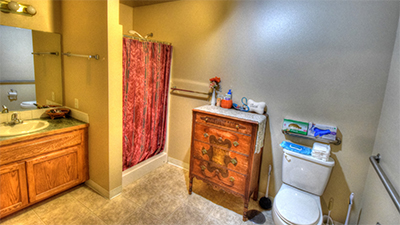
BeeHive Homes of Alamogordo offers private bedrooms with private bathrooms
BeeHive Homes of Alamogordo provides medication monitoring and documentation
BeeHive Homes of Alamogordo serves dietitian-approved meals
BeeHive Homes of Alamogordo provides housekeeping services
BeeHive Homes of Alamogordo provides laundry services
BeeHive Homes of Alamogordo offers community dining and social engagement activities
BeeHive Homes of Alamogordo features life enrichment activities
BeeHive Homes of Alamogordo supports personal care assistance during meals and daily routines
BeeHive Homes of Alamogordo promotes frequent physical and mental exercise opportunities
BeeHive Homes of Alamogordo provides a home-like residential environment
BeeHive Homes of Alamogordo creates customized care plans as residents’ needs change
BeeHive Homes of Alamogordo assesses individual resident care needs
BeeHive Homes of Alamogordo accepts private pay and long-term care insurance
BeeHive Homes of Alamogordo assists qualified veterans with Aid and Attendance benefits
BeeHive Homes of Alamogordo encourages meaningful resident-to-staff relationships
BeeHive Homes of Alamogordo delivers compassionate, attentive senior care focused on dignity and comfort
BeeHive Homes of Alamogordo has a phone number of (575) 215-3900
BeeHive Homes of Alamogordo has an address of 1106 San Cristo St, Alamogordo, NM 88310
BeeHive Homes of Alamogordo has a website https://beehivehomes.com/locations/alamogordo/
BeeHive Homes of Alamogordo has Google Maps listing https://maps.app.goo.gl/ADjJ88EoCTadK58t5
BeeHive Homes of Alamogordo has Instagram page https://www.instagram.com/beehivealamogordo/
BeeHive Homes of Alamogordo has an YouTube page https://www.youtube.com/@WelcomeHomeBeeHiveHomes
BeeHive Homes of Alamogordo won Top Assisted Living Homes 2025
BeeHive Homes of Alamogordo earned Best Customer Service Award 2024
BeeHive Homes of Alamogordo placed 1st for Senior Living Communities 2025
People Also Ask about BeeHive Homes of Alamogordo
What is BeeHive Homes of Alamogordo Living monthly room rate?
The rate depends on the level of care that is needed. We do a pre-admission evaluation for each resident to determine the level of care needed. The monthly rate is based on this evaluation. There are no hidden costs or fees
Can residents stay in BeeHive Homes until the end of their life?
Usually yes. There are exceptions, such as when there are safety issues with the resident, or they need 24 hour skilled nursing services
Do we have a nurse on staff?
No, but each BeeHive Home has a consulting Nurse available 24 – 7. if nursing services are needed, a doctor can order home health to come into the home
What are BeeHive Homes’ visiting hours?
Visiting hours are adjusted to accommodate the families and the resident’s needs… just not too early or too late
Do we have couple’s rooms available?
Yes, each home has rooms designed to accommodate couples. Please ask about the availability of these rooms
Where is BeeHive Homes of Alamogordo located?
BeeHive Homes of Alamogordo is conveniently located at 1106 San Cristo St, Alamogordo, NM 88310. You can easily find directions on Google Maps or call at (575) 215-3900 Monday through Sunday 9:00am to 5:00pm
How can I contact BeeHive Homes of Alamogordo?
You can contact BeeHive Homes of Alamogordo by phone at: (575) 215-3900, visit their website at https://beehivehomes.com/locations/alamogordo/ or connect on social media via Instagram Facebook or YouTube
Residents may take a trip to the Tularosa Basin Museum of History . The Tularosa Basin Museum offers local heritage exhibits well suited for assisted living and memory care enrichment during senior care and respite care outings.